
Selling things you make at local craft fairs is a good way to start your business. You can test your products to learn how they sell. You’ll get feedback from customers to help you improve your items. I personally like to sell at craft fairs because I enjoy the interactions with customers. If I do shows over time in the same cities, I get repeat business from those who have bought from me before.
Beyond the dates of a craft show, there are no further commitments. When a show is over, it’s over. You can do one or two events and walk away with a minimum of expense of time and money and having learned a lot. You may end up enjoying the craft fair experience and choose to do shows regularly.
At the fair, you have your own scaled-down model of a retail store, even if it’s only for two or three days. You can use a show to test new products, designs, price changes and booth displays. You are directly in touch with the marketplace, so if your work isn’t selling, you will find out why immediately from customers’ reactions and sales results.
In selling direct to the public, you keep the entire amount of the sales, minus expenses. Since almost all shows are held on weekends, your week is free to create more pieces. You have control of your time. It’s a great feeling to have the freedom to go to a movie in the middle of the week when everyone else is laboring under canned air, moronic managers, and minimal wages.
How to find craft shows
Click here to find craft shows around the U.S. Some of the paid services may seem like a lot of money, but you can make back or save hundreds of dollars more than the cost of the service by selecting or avoiding a show because of what you learn from them. Avoiding the bad shows is worth the price alone.
Do your first show close to home, within one hundred miles. There are two good reasons; lower gas and mileage expenses, and less stress. A shorter drive and a longer night’s sleep give you more energy for the show. Shows can be both exciting and demanding. Hundreds, if not thousands, of potential customers come by your booth, many of whom will look at your products and talk to you.
If at all possible, visit a show beforehand to learn if it attracts the right crowd for what you’re selling. If you can’t go in person, ask a friend that lives nearby to go. If that’s not possible you’ll have to rely on word-of-mouth information from other crafts persons and reviews found in the craft show guides.
Which craft fairs should you do
When selecting craft shows, choose the kind of event that will attract buyers of the products you make. There are several different kinds of shows.
- For example there are juried art and crafts fairs where you must submit images to be judged for acceptance. Juried craft shows tend to be higher quality and attract crowds who support fine crafts with their purchases.
- There are other kinds of events sometimes referred to as country craft shows. Country craft shows are distinctly different from the juried art and craft shows. Their main criteria for entry is that you aren’t selling assembled kits or imported products. The crafts exhibited are often for the home, usually selling from $2 to $50. These shows often work well for small inexpensive gift items. I have tried them with high-priced crafts ($150 to $200 range) and did not do well. When selling higher priced items, choose the more established, juried art and craft shows.
- Renaissance fairs are outdoor events that include craft booths as a part of a total entertainment event. Vendors dress in medieval costume and booths must have medieval looking theme. A variety of food, drink, jugglers, jousters, knights, and fair maidens abound at these festivals. Some renaissance fairs are so popular they go on every weekend for weeks in a row. Others take place on a single weekend.
- Mall shows are usually produced by a show promoter or a local organization. These shows are often part of a tour sponsored by a producer putting on events in one or several nearby states. Many exhibitors follow the circuit for several weeks, especially in the fall and pre-Christmas months. Mall shows may be an option for otherwise empty weekends. Mall shows might help, too, in slow months like January and February.
Special interest shows
- Local fashion shows. Women’s groups and charity organizations often produce fashion shows for original work. Google “fashion shows and (your city)”.
- Home shows and boat shows. Many major cities have home and garden shows and/or boat shows at least once a year. Look for announcements in your newspaper.
- Gift shows. Gift shows exist for both consumers and store buyers, usually held in large convention centers.
- Flea markets. In some cities, flea markets have grown to include handmade items. Booth rental is not as high as craft shows and they draw big crowds. Check them out, though, before you sign up, because some flea markets are full of garage sale items. You want the markets where there are many vendors of handmade products.
- Expos. If your product lends itself to special interests, you can find events for horses, dogs, toys, kids, brides, and all kinds of interests.
Applying for craft shows
 Craft shows and other events each have their own application process. Zapplication.org makes it easy to apply to many shows from one website. For events not on Zapp, applications are typically mailed or emailed upon request from the show producers. Once you are on their mailing list, you will probably continue to receive applications for a few years.
The more well attended shows are juried months in advance of the show date because they get tons of applicants. Artists must submit slides or photos of their recent work and possibly a photo of their booth display to the show producer, along with a jury fee.
There is no guarantee that you will be accepted into a show with your first application. Craft shows will often give preference for reentry to previous exhibitors.
Will you make money doing craft shows? Depends on how well attended the event is, how attractive your display is and what you are selling. You also need healthy profit margins. For that, your prices have to be in line with what customers are willing to pay.
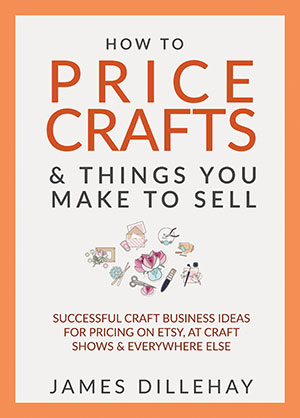
To learn more about pricing crafts strategically, enhancing the perceived value of your items, and lowering your material costs, get the book How to Price Crafts and Things You Make to Sell.
Related article: Craft show booths, canopies